By Detlev Schlichter Feb 9th, 2012
The Bank of England is expected today to announce another round of debt monetization, called “quantitative easing”. A majority of economists polled by Dow Jones Newswire earlier this week expected the central bank’s policy committee to agree “to £50 billion ($79 billion) of additional bond purchases using freshly created money to underpin demand and ensure its 2% inflation target is met. Some expect it to go for £75 billion.”
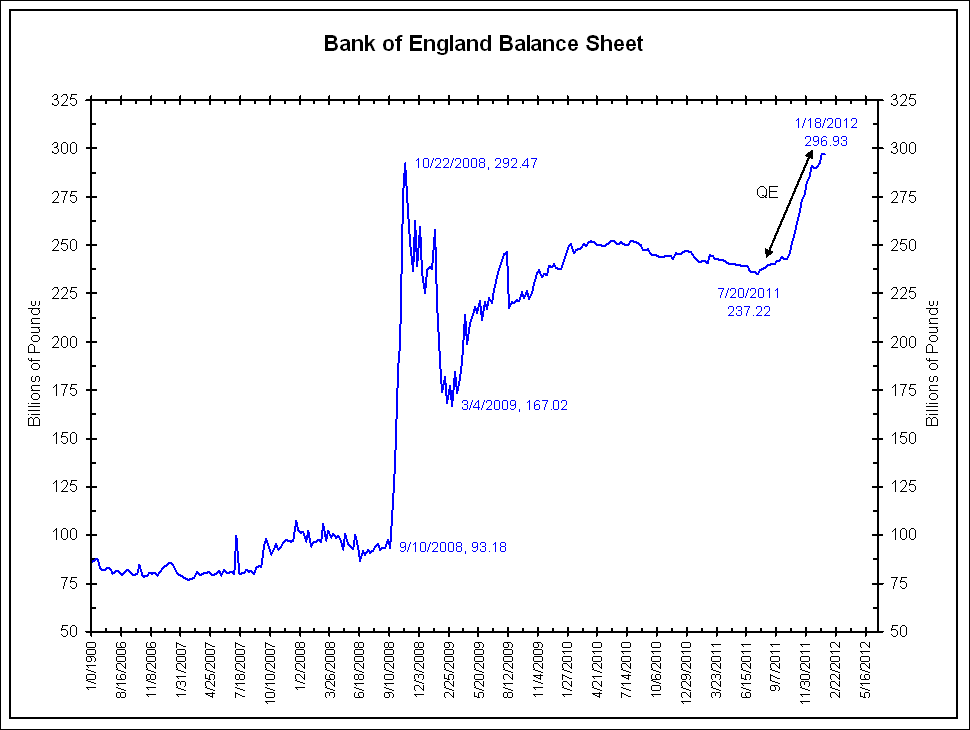
Official inflation is over 4 percent in the UK, so how printing more money is going to help meet a 2 percent inflation target is a bit difficult to grasp, but let us not quibble over such details. What counts is that the Bank of England is the undisputed champ of QE. After the next round of money printing, the BoE will have created new money to the tune of 20 percent of GDP, and will fund more than a quarter of all outstanding government debt via the printing press.
£275 billion of QE so far have not solved the crisis — the economy last year grew by less than 1 percent — but have lifted inflation and thus squeezed real incomes. At the same time, this policy has kept the government’s borrowing costs low and the banks from shrinking and in certain cases from collapsing. As with any policy of monetary debasement, the direct beneficiaries are the state and the banks.
This has tradition behind it. The Bank of England was founded in 1694 for the specific purpose of financing the Crown, which at the time was in low standing with its creditors. From its inception the Bank of England enjoyed numerous legal privileges that cemented its dominant position in the nascent but growing British banking system. Among them was the privilege to issue money against obligations of the Crown — a form of early ‘debt monetization’. Of course, the gold standard was a hindrance to unlimited money creation, so whenever the state needed more funds, usually at times of war, the Bank of England was conveniently absolved of any of its contractual agreements to redeem in specie, and kindly asked to fund the state through the creation of new money.
Gentlemen, start your printing presses!
MORE
Showing posts with label BoE. Show all posts
Showing posts with label BoE. Show all posts
10 February 2012

28 January 2012
Living In A QE World
By James Bianco - January 27th, 2012, 8:15AM
All Central Bank Balance Sheets Are Exploding Higher, Or Engaged In QE
The degree to which central banks around the world are printing money is unprecedented.
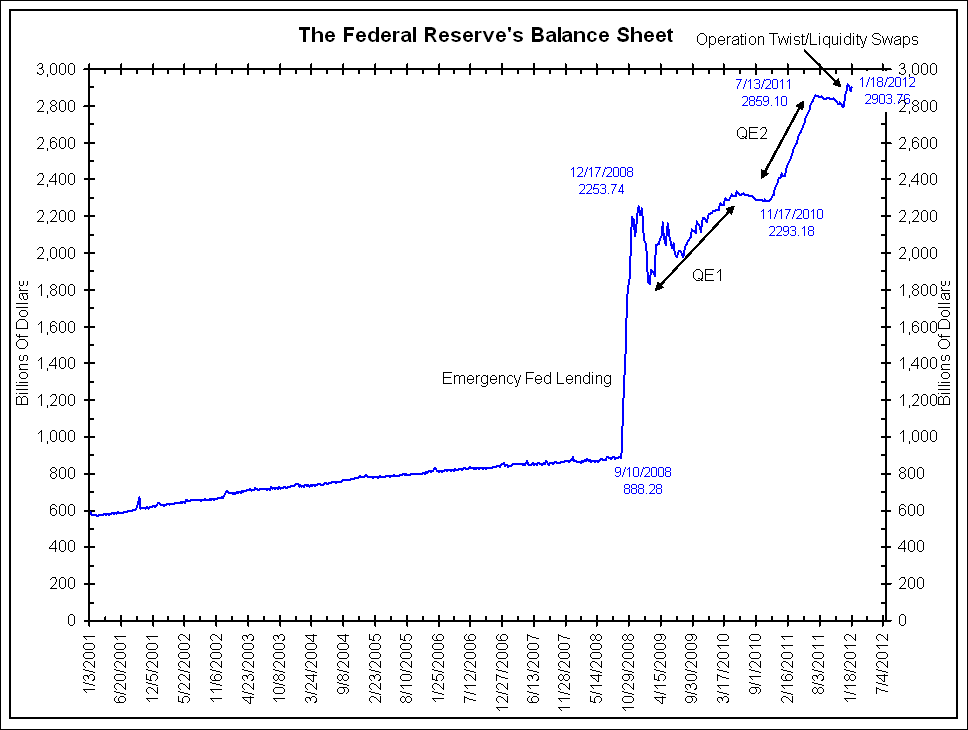
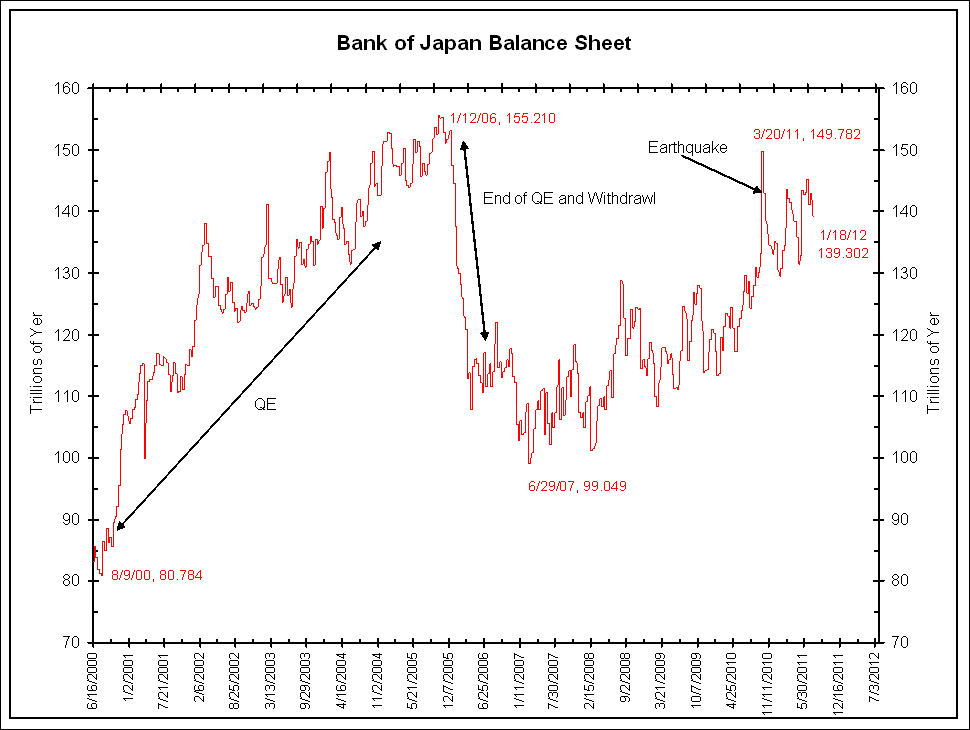
The first eight charts below show the balance sheets of the largest central banks in the world. They are the European Central Bank (ECB), the Federal Reserve (Fed), the Bank of Japan (BoJ), the Bank of England (BoE), the Bundesbank (Germany), the Banque de France, the People’s Bank of China (PBoC) and the Swiss National Bank (SNB). Noted on the charts are significant events or growth rates.
Shown is the size of each respective balance sheet in its local currency. Note that all are exploding higher as every chart goes from the lower left to the upper right. Most are still making new all-time highs. If the basic definition of quantitative easing (QE) is a significant increase in a central bank’s balance sheet via increasing banking reserves, then all eight of these central banks are engaged in QE.
>
Click to enlarge:

˜˜˜

˜˜˜

˜˜˜

The degree to which central banks around the world are printing money is unprecedented.
The first eight charts below show the balance sheets of the largest central banks in the world. They are the European Central Bank (ECB), the Federal Reserve (Fed), the Bank of Japan (BoJ), the Bank of England (BoE), the Bundesbank (Germany), the Banque de France, the People’s Bank of China (PBoC) and the Swiss National Bank (SNB). Noted on the charts are significant events or growth rates.
Shown is the size of each respective balance sheet in its local currency. Note that all are exploding higher as every chart goes from the lower left to the upper right. Most are still making new all-time highs. If the basic definition of quantitative easing (QE) is a significant increase in a central bank’s balance sheet via increasing banking reserves, then all eight of these central banks are engaged in QE.
>
Click to enlarge:

˜˜˜
˜˜˜
˜˜˜
21 December 2011
Analysis: BOE MPC Sticks To The Speed Limit On QE
LONDON (MNI) - The minutes of the December Monetary Policy Committee meeting showed that the MPC was united in sticking to its current pace of asset purchases, respecting a speed limit imposed by markets.
Analysts believe the MPC could step up the pace of quantitative easing a little, and the minutes support that view, but the committee cannot put its foot down hard on the policy accelerator. Sanctioning a three month round of Stg75 billion in QE in February is reckoned to be as fast as the BOE could go, and even that might prove uncomfortably fast.
The problem the MPC faces is it does not have complete freedom of choice over the size and pace of its quantitative easing policy, as it is curtailed by market participants' propensity to sell it gilts.
Analysts believe the MPC could step up the pace of quantitative easing a little, and the minutes support that view, but the committee cannot put its foot down hard on the policy accelerator. Sanctioning a three month round of Stg75 billion in QE in February is reckoned to be as fast as the BOE could go, and even that might prove uncomfortably fast.
The problem the MPC faces is it does not have complete freedom of choice over the size and pace of its quantitative easing policy, as it is curtailed by market participants' propensity to sell it gilts.
19 December 2011
Britain Set to Roll Out Sweeping Banking Reform
By Erik Pineda: Subscribe to Erik's RSS feed
December 19, 2011 12:30 AM EST
Britain's banking system is set to undergo major overhauls that the government aims to implement by 2019, reports said.
The key component of the reform is the planned separation of British banks' retail and investment divisions, as recommended in the September assessment report issued by the Independent Commission on Banking, headed by former Bank of England chief economist John Vickers.
Britain's banking system is set to undergo major overhauls that the government aims to implement by 2019, reports said.
According to Agence France Presse, the British government is intending to roll out all the reforms that the Vickers Commission urged to avert a recurrence of the financial crisis of 2008, when the Bank of England was compelled to rescue major financial institutions to avert the meltdown of Britain's banking industry.
International Monetary Fund Managing Director Christine Lagarde has predicted another financial crisis if the eurozone debt situation deteriorates further.
The new banking reform measures, the AFP said, will be formally announced on Monday by Business Minister Vince Cable.
December 19, 2011 12:30 AM EST
Britain's banking system is set to undergo major overhauls that the government aims to implement by 2019, reports said.
The key component of the reform is the planned separation of British banks' retail and investment divisions, as recommended in the September assessment report issued by the Independent Commission on Banking, headed by former Bank of England chief economist John Vickers.
Britain's banking system is set to undergo major overhauls that the government aims to implement by 2019, reports said.
According to Agence France Presse, the British government is intending to roll out all the reforms that the Vickers Commission urged to avert a recurrence of the financial crisis of 2008, when the Bank of England was compelled to rescue major financial institutions to avert the meltdown of Britain's banking industry.
International Monetary Fund Managing Director Christine Lagarde has predicted another financial crisis if the eurozone debt situation deteriorates further.
The new banking reform measures, the AFP said, will be formally announced on Monday by Business Minister Vince Cable.
Subscribe to:
Posts (Atom)